A fictional BeKoder story
One more question
The empty file
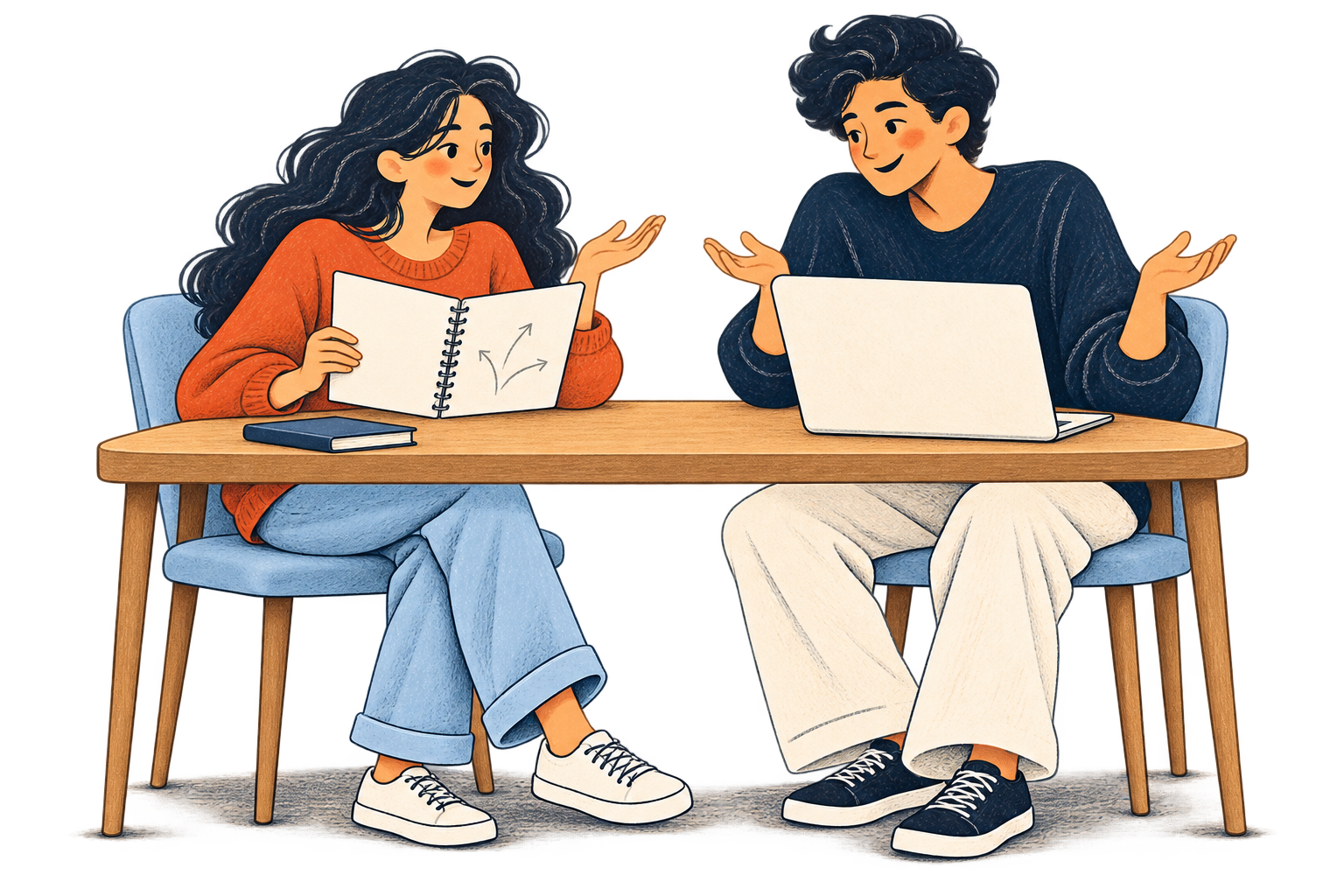
Mira arrived at the library with a notebook full of arrows and a program that did nothing. Across the study table, Kabir had opened a new file. He had been looking at it for quite a while.
“Do you know where to start?” he asked.
They laughed, quietly enough for the library. Each had imagined that everyone else understood programming already. Mira could picture what she wanted to make but struggled to begin. Kabir could remember a few commands but could not explain them. For the first time that afternoon, the empty file felt less lonely.
Something small and useful
Mira pointed to the books between them. “What if we made a reading list?”
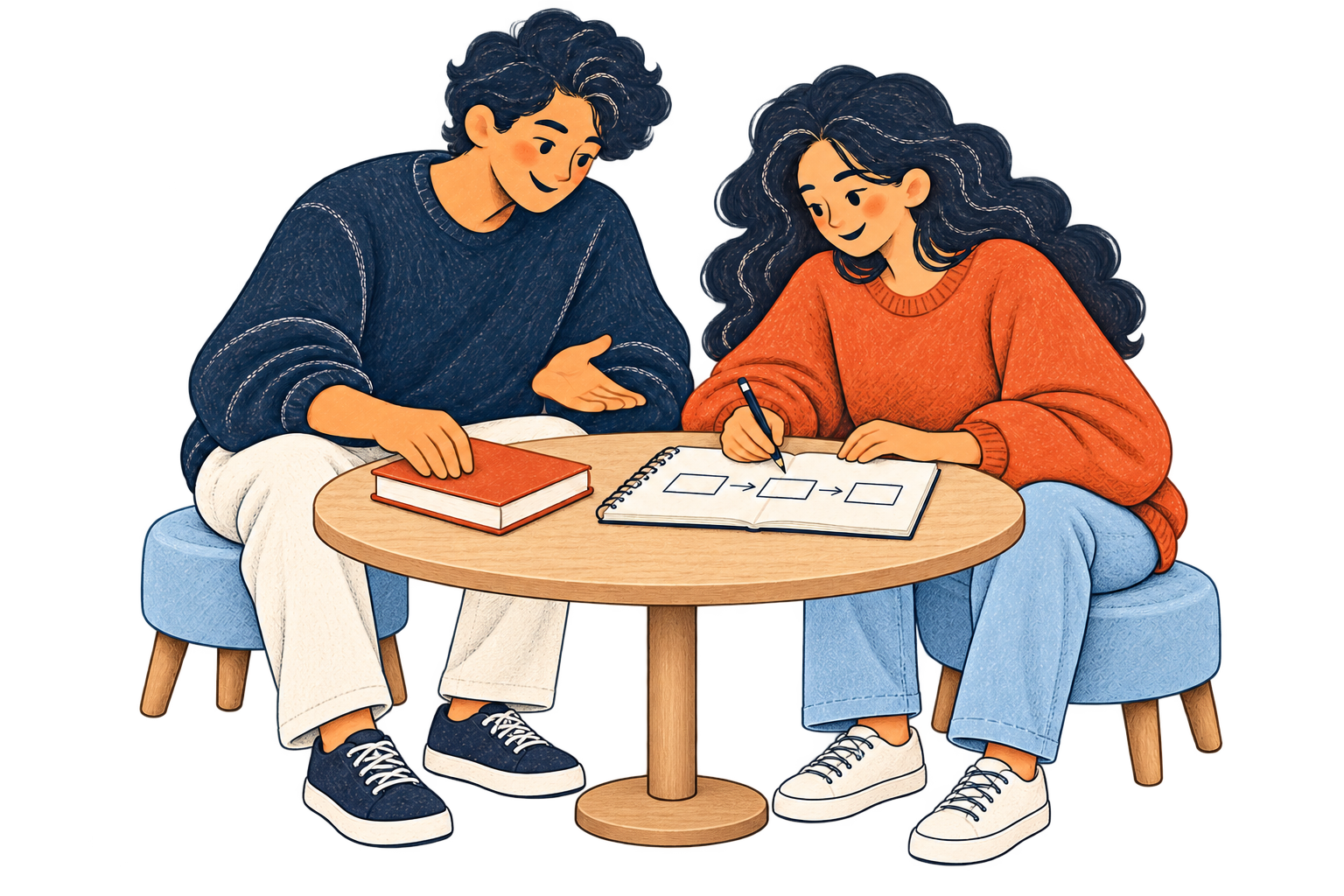
Nothing grand: add a book, show the list, mark one as read. Kabir reached for the keyboard, then stopped when Mira opened her notebook.
“Can we say what happens first?”
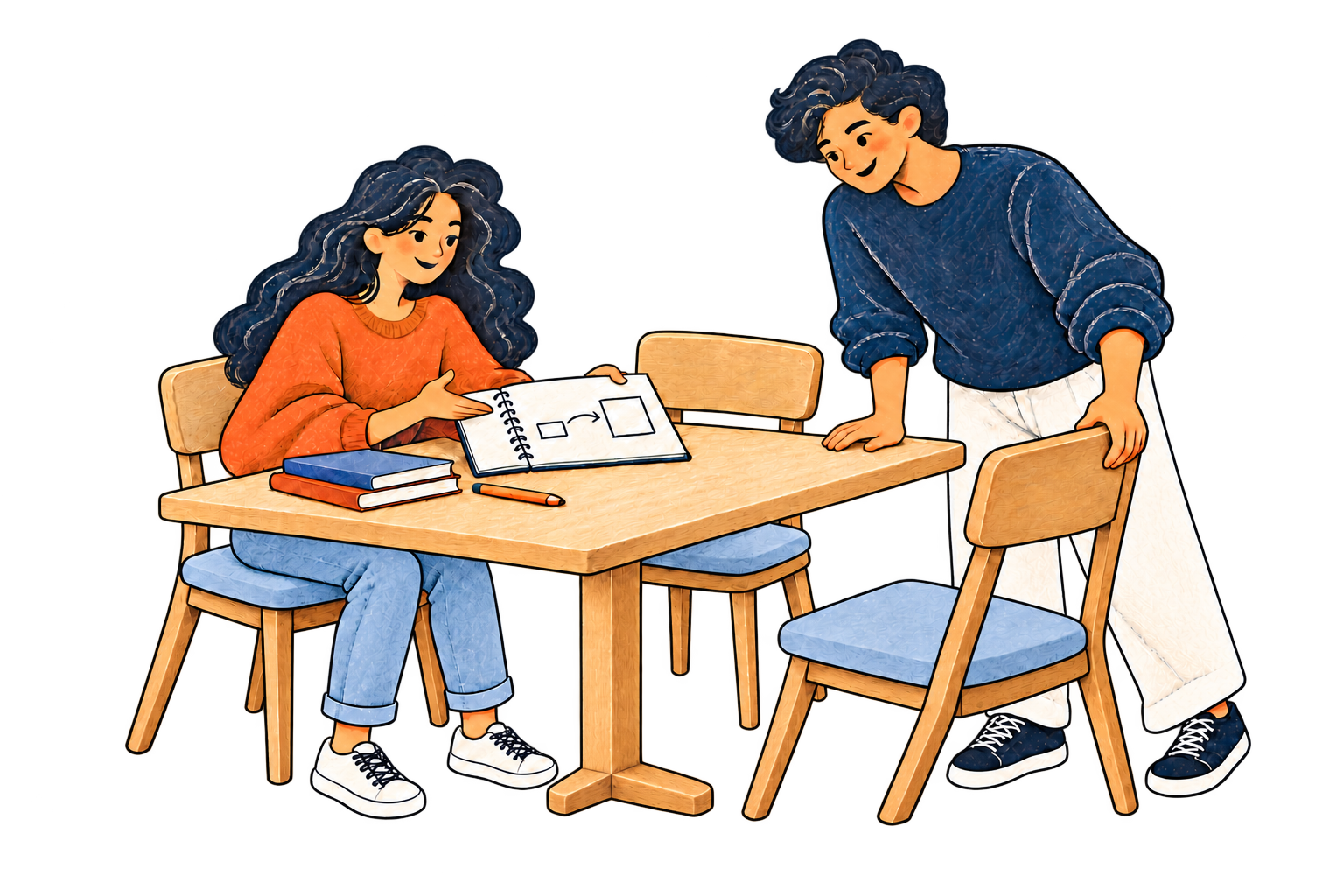
They wrote the steps in ordinary words. Kabir suggested trying one book before adding more. Mira drew a box for its title and another for its reading status. An arrow connected the two. The sketch was untidy, but it gave them something they could both follow. Now the first line of code had a purpose.
A bug worth understanding
Soon, one title appeared twice. Kabir deleted a line. The whole list disappeared.
“That was a confident guess,” he said.
Mira smiled. “Mine was going to be the same guess.”
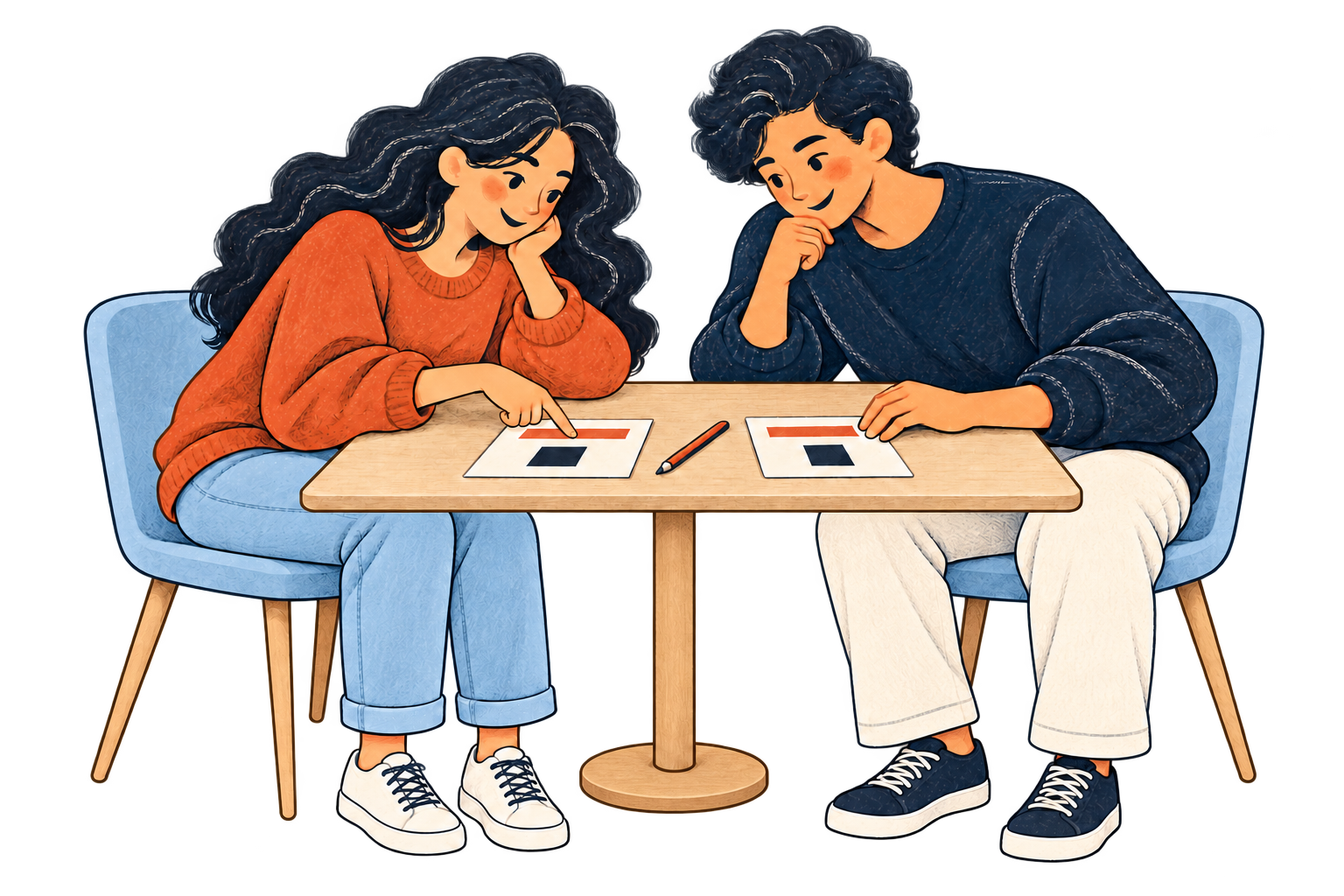
They put the line back and moved the laptop aside. With two paper cards, they followed their steps: add the first book, add the second book, show the list. Both cards ended up holding the second title.
“We keep putting the new title in the old place,” Mira noticed.
Kabir tried their corrected steps with a single card, then with two different books. This time, each kept its own title. They returned to the program knowing what to change, and why.
Understanding before speed
On their next library afternoon, Mira found a shorter way to write a loop. Kabir asked how it knew when to stop. She started explaining, paused, and reached for the notebook.
“I think I copied the shape without understanding the middle.”
Together, they traced the loop with an empty list, then a list with one book. Kabir caught a missing step; Mira spotted where his explanation skipped ahead. Neither had the whole answer alone.
They kept the slower version until they could explain it clearly. Finishing felt good. Knowing how their small program worked felt even better.
Room for another chair
A week later, someone at the next table noticed their reading list.
“Is that difficult to make?”
“Parts of it were,” Kabir said.
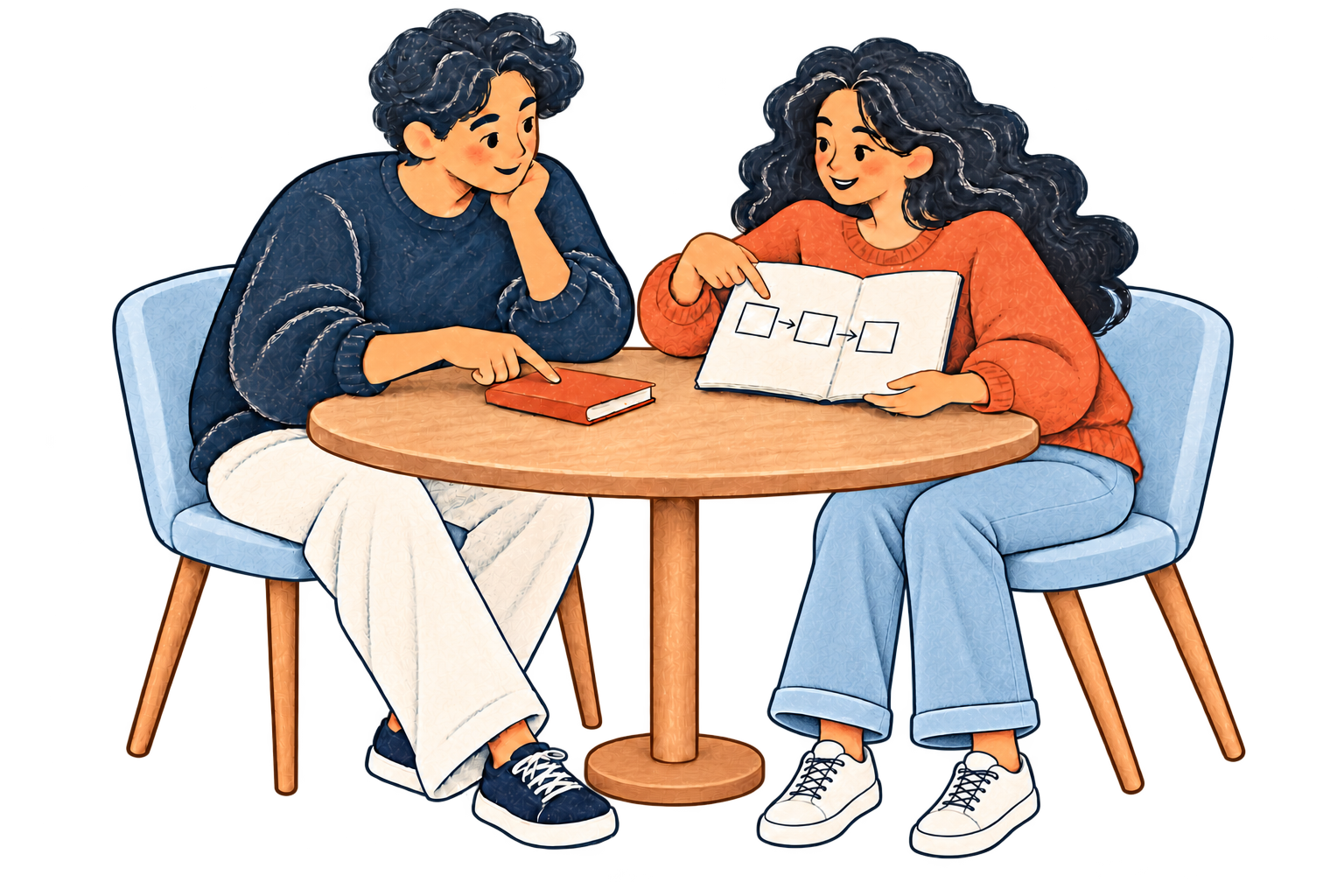
“We started with one book,” Mira added, turning the notebook around.
They pulled over another chair. There was no perfect demonstration: a pencil rolled away, a title was misspelled, and they still had questions about saving the list. But they could show the first step.
That is where this little story leaves them: making room, asking one more question, and trying another example. Mira and Kabir do not know everything. They have learned that they can begin before they do.